

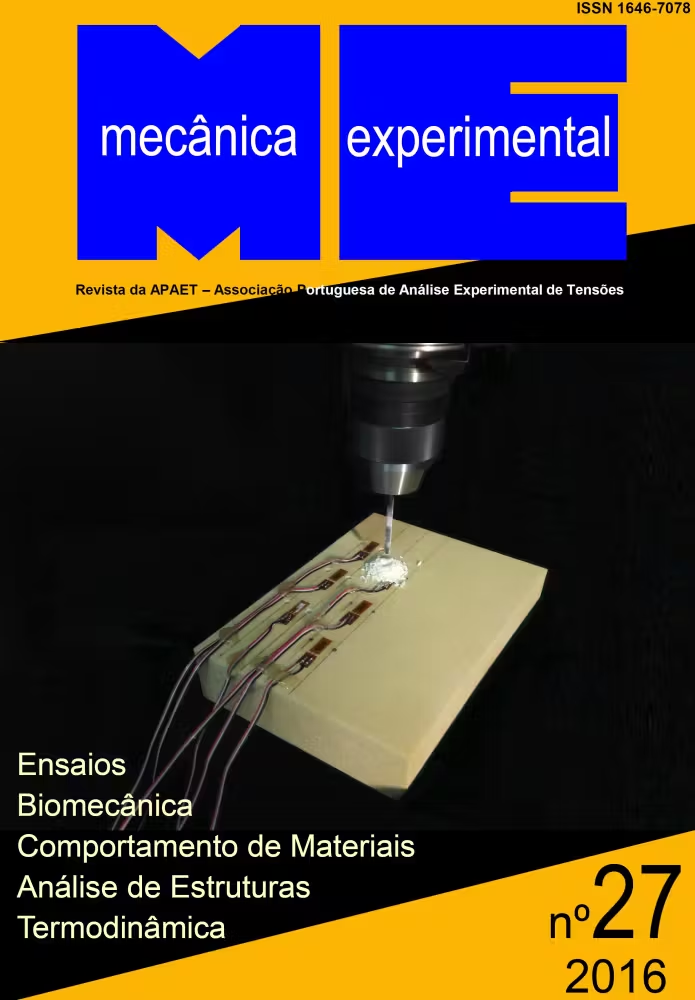
Temperature evaluation in ex-vivo bovine bones submitted to drilling processes
Authors: M. G. Fernandes, E. M. M. Fonseca, R. M. Natal, M. I. Dias, A. C. Lopes, J. E. Ribeiro
ABSTRACT:
The thermal bone necrosis induced during the drilling process is a frequent phenomenon, which contributes to post-operative problems. The frictional heat generated from the contact between the drill bit and hole wall, is unavoidable. However, using advanced techniques for acquiring thermal data on bone drilling is important to ensure quality during the perforation. The purpose of this study is to present two different experimental methods to analyse the drilling conditions that generate the lower temperatures, avoiding the occurrence of thermal bone necrosis. Ex-vivo bovine bones were used to simulate the drilling process considering the effect of drill bit diameter, drill speed and feed-rate. Different experiments were performed to assess the repeatability of the tests. The results identified the drill bit diameter as the most critical parameter for inducing higher temperatures in bone drilling.
Key Words:
Affiliation:
M. G. Fernandes1 | E. M. M. Fonseca2 | R. M. Natal1 | M. I. Dias3 | A. C. Lopes4 | J. E. Ribeiro2
1INEGI, Faculty of Engineering of University of Porto – Portugal.
2LAETA, INEGI, Polytechnic Institute of Bragança – Portugal.
3School of Agrarian and Veterinary Sciences, University of Trás-os-Montes e Alto Douro – Portugal
4MS Student in Industrial Engineering, Polytechnic Institute of Bragança – Portugal